
Open, Closed, Partially Open & Partially Enclosed Structures
When designing buildings subject to wind loads (e.g., according to ASCE 7‑16, Chapter 26.2), it is essential to determine how ‘enclosed’ a structure is. The enclosure classification strongly influences internal wind pressures, which in turn affect structural components (walls, windows, doors, roof systems, etc.).
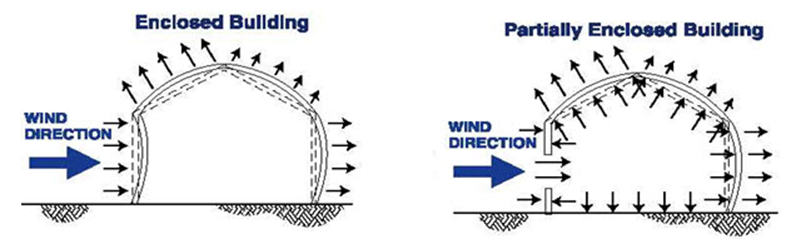
Four classifications are defined:
- Open
- Partially Open
- Partially Enclosed
- Enclosed
Each classification corresponds to different magnitudes of internal pressures and therefore different design considerations.
Open Structure
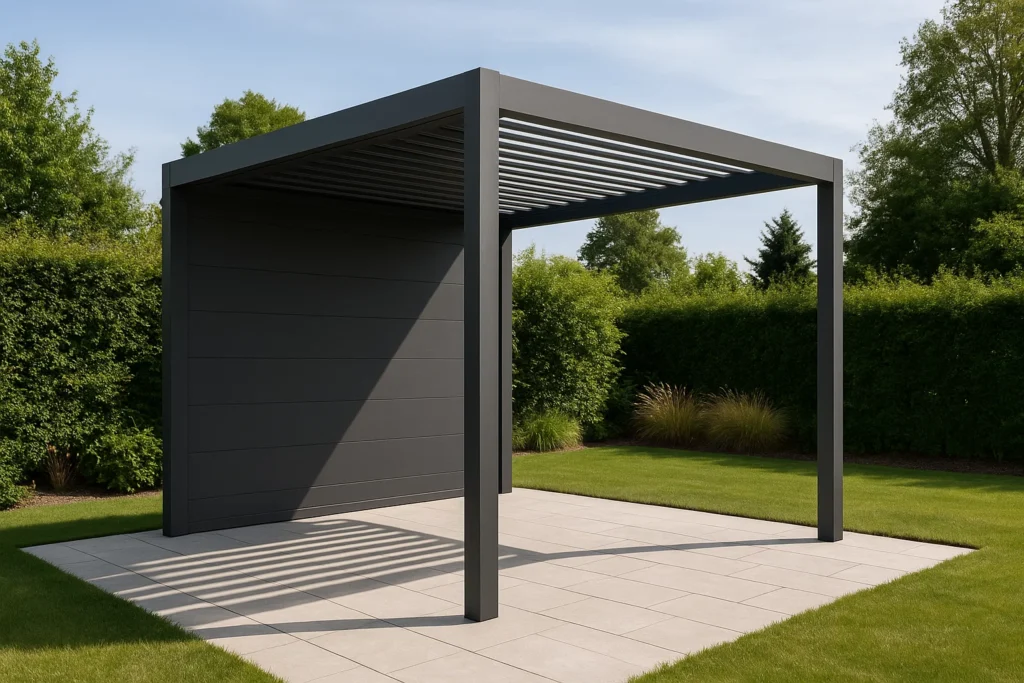
A structure is considered open when each wall of the building is at least 80% open—meaning it allows air to flow freely through the structure. In this condition, wind can enter, pass through, and exit the building with minimal obstruction, resulting in very little internal pressure buildup.
Because all walls are predominantly open, the wind does not become trapped inside. Instead, it flows smoothly through the structure without creating significant internal pressure differences.
From a design perspective, internal wind pressures are considered negligible. Engineers typically only account for external wind pressures—both positive (windward) and negative (leeward)—rather than large internal uplift or “ballooning” effects that can occur in more enclosed structures.

Enclosed Structure
A structure is classified as enclosed when all walls, including the roof, have only small openings—none larger than 4 ft² (0.37 m²) or 1% of the wall area, whichever is smaller. In an enclosed building, windows, doors, and other openings are closed and form part of the building envelope, preventing significant airflow through the structure.
Because the envelope is mostly sealed, internal pressures remain moderate and stable. Designers can rely on standard enclosed internal pressure coefficients from the building code, since air infiltration is minimal under normal conditions.

Partially Enclosed Structure
A partially enclosed structure is one that allows wind to enter easily through a large opening on one side but offers limited exit paths on the remaining sides. According to ASCE 7, a building is partially enclosed if:
The total area of openings on the wall that receives positive pressure exceeds by more than 10% the sum of openings in the rest of the building envelope (walls and roof), and
The total area of those openings also exceeds 4 ft² or 1% of that wall area, whichever is smaller, while openings in the rest of the envelope do not exceed 20% of the total area.
This imbalance in opening areas creates a one-way inflow of air, leading to high internal pressures as wind enters faster than it can escape—similar to a balloon inflating. These pressures can dramatically increase uplift forces on the roof and outward forces on walls and doors.
Partially Open Structure
A partially open structure does not fit neatly into the definitions of open or partially enclosed. It has enough openings to allow air to flow through, but not to the extent that every wall is 80% open. Conversely, it lacks the extreme imbalance of openings that would create strong internal pressures.
Internal pressures in partially open structures are intermediate—greater than in enclosed buildings but less severe than in partially enclosed ones. The design must still account for some degree of internal pressure, depending on the size and distribution of openings.


Determining the Correct Enclosure Classification
Determining a building’s enclosure classification is a crucial step when calculating internal wind pressures that affect components such as windows, doors, roofs, and storm shutters.
For structures meant to remain habitable during storms, engineers often design the main wind force resisting system using the more extreme partially enclosed pressure values. This ensures the building remains safe even if a window fails or debris breaches the envelope. However, hurricane-rated windows and shutters themselves may only need to meet enclosed pressure requirements. Always confirm with your engineer and local building officials which classification applies.
Design Tools and Code Notes
Most C&C charts, garage door wind tables, and Engineering Express calculators assume an enclosed structure (the same pressures are typically used for partially open buildings). This is stated in the notes or report pages of each tool.
Certain structures, like sunrooms or pergolas, may be designed as partially enclosed or enclosed depending on engineer discretion. Yet, most permitted buildings in high-wind regions must meet partially enclosed design pressures to ensure full code compliance and safety.
When uncertain, design for the more conservative partially enclosed case—it’s the safest and most widely accepted approach.
For guidance with your next project, explore our Plans, Calculators, Knowledge Base,
or contact us directly for site-specific support
Last Update: February 4, 2026
Related Knowledge Base Posts -
- Should a professional utilize the ASD (Allowable Stress Design) method or the LRFD (Load Resistance Factored Design) method when calculating the required wind pressure for use with tested-approved systems?
- ASCE 7 Least Horizontal Dimension – Minimum Building Width
- ASCE 7 Wall Zones 4 & 5 Explained
- ASCE 7 Basic Wind Speed
- How To Calculate Porosity of a Louver – Sign – Fence Per ASCE 7
- How to Find Wind Speed & Snow Using the ASCE and ATC Hazards Tools by Location Websites