
Egress & Emergency Escape Requirements for Windows
In a fire or other emergency, the right window can be the fastest way to safety. That’s why egress windows are required: they make sure every bedroom or living space has a quick, dependable escape route.
What Is an Egress Window?
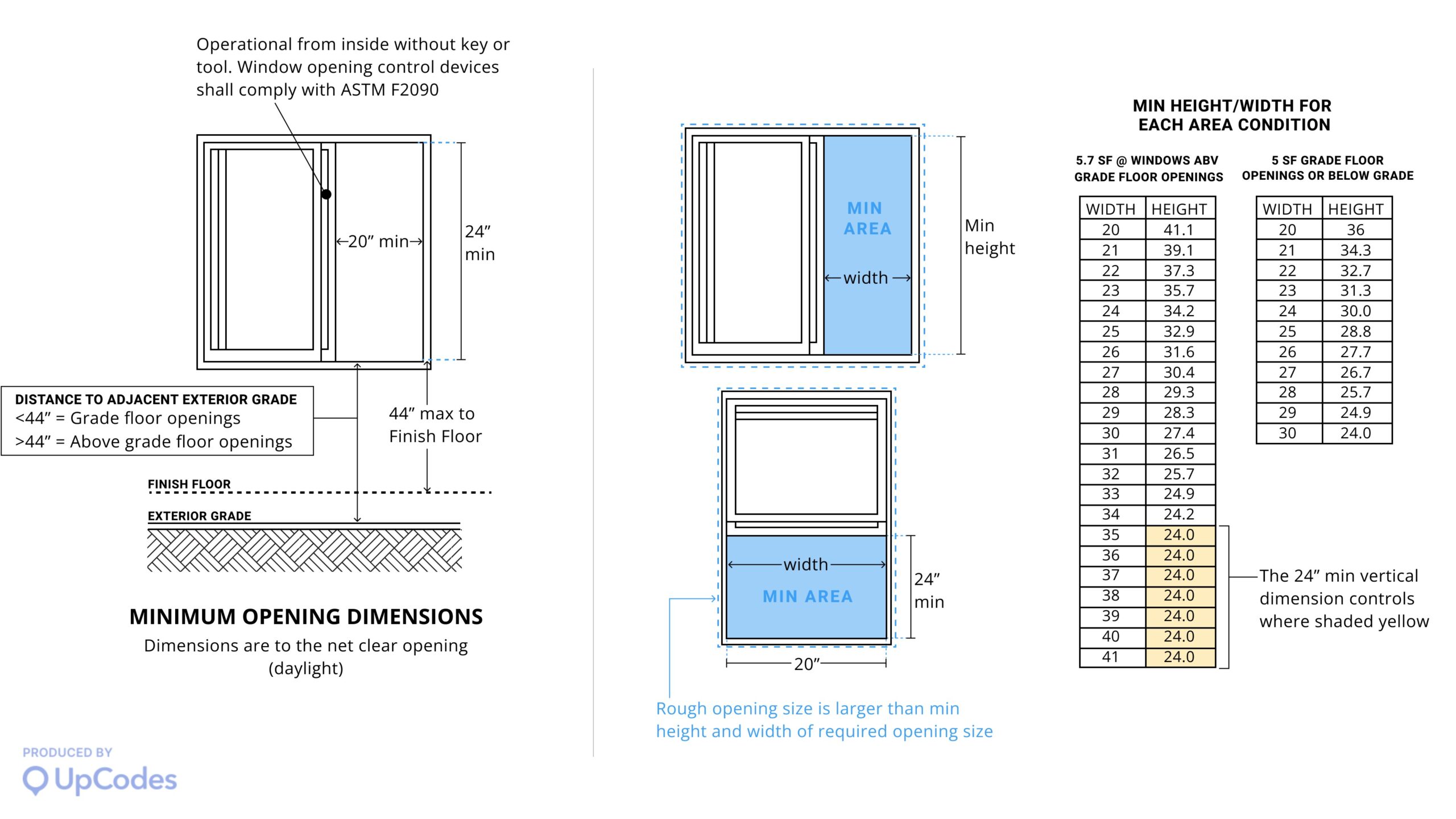
- Must be operable from the inside without keys, tools, or special knowledge .
- Must provide direct access to the exterior, allowing both escape for occupants and entry for first responders.
Keys Numbers
To qualify as code-compliant, an egress opening has to meet several size rules (IBC 2021/FBC 2023 §1030.2):
- Net clear opening area: at least 5.7 sq. ft. (5.0 sq. ft. if the opening is at grade level).
- Minimum opening width: 20 in.
- Minimum opening height: 24 in.
- Maximum sill height: 44 in. above the finished floor.
- 20W X 24H does not equal min opening size, watch the minimal condition at the right
- The net clear opening is measured with the window fully operational. Frame, sash, and hardware reduce the usable area, so the nominal window size is not the same as the clear opening.
Special Considerations:
Window Wells
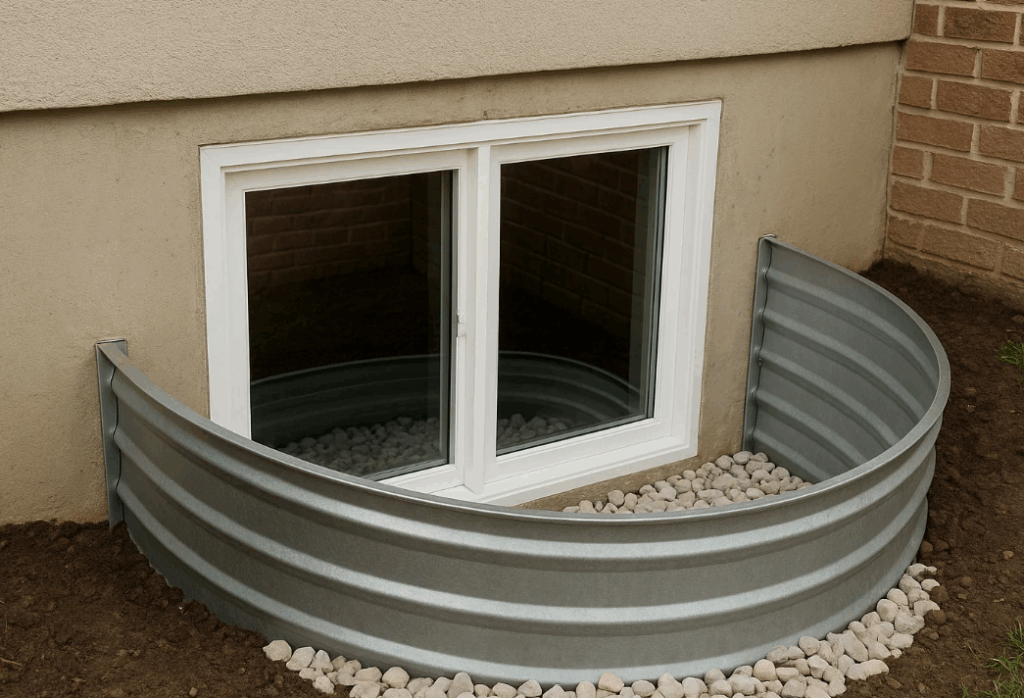
When an egress window is installed below ground level, a window well is required to provide safe escape and rescue access (IBC 2021/FBC 2023 §1030.5). The well must offer a clear floor area of at least 9 square feet with a minimum dimension of 36 inches in both directions. If the window well is deeper than 44 inches, a permanently attached ladder or steps must be provided to allow easy exit without the use of tools. Proper drainage should also be included to prevent water accumulation, ensuring the escape path remains clear and functional.
Replacement Windows
Upgrading older windows doesn’t have to mean a full structural overhaul. The International Building Code and Florida Building Code (IBC 2021/FBC 2023 §1030.4) allow flexibility for replacements when a fully compliant opening isn’t possible within the existing frame. The key is safety first: choose a unit that gives the largest clear opening available, keeps or improves the original operating style, and never reduces the escape potential of the space. This approach makes renovations practical while maintaining essential life-safety performance.
For guidance with your next project, explore our Plans, Calculators, Knowledge Base,
or contact us directly for site-specific support
Last Update: September 26, 2025
Related Knowledge Base Posts -
- Should a professional utilize the ASD (Allowable Stress Design) method or the LRFD (Load Resistance Factored Design) method when calculating the required wind pressure for use with tested-approved systems?
- Did the wind loading requirements change for rooftop structures for ASCE 7-22 – ASCE 7-16 & The Florida Building Code?
- What wind speed should I use for my project?
- ASCE 7 WIND EXPOSURE CATEGORIES AND HOW EXPOSURE ‘D’ WORKS
- What is a window or door buck
- What are the requirements for using ASTM Missile Level E in Florida and the US?