
Engineering Tiki Huts in Florida: Tribal Exemption Limits and Code-Compliant Design
Florida recognizes an exemption allowing Native American tribes—primarily the Seminole Tribe—to construct traditional chickee or tiki huts without full compliance with the Florida Building Code (FBC) when built on tribal lands. This exemption exists due to tribal sovereignty and cultural preservation of traditional building methods.
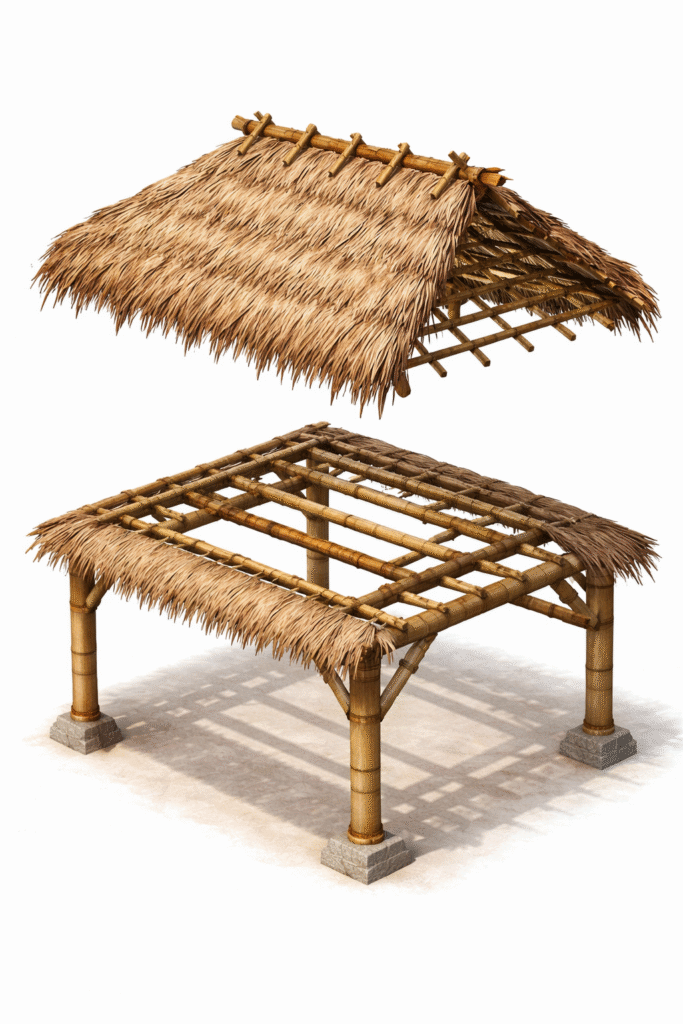
Structural Behavior of Tiki Huts
Tiki huts present unusual structural challenges because palm fronds are non-standard materials that do not behave like conventional roofing systems.
Key characteristics:
- Low dead load
- High aerodynamic uplift
- Variable stiffness
- Non-rated connections
Palm frond roofing is often best treated as decorative cladding, not structural roofing.
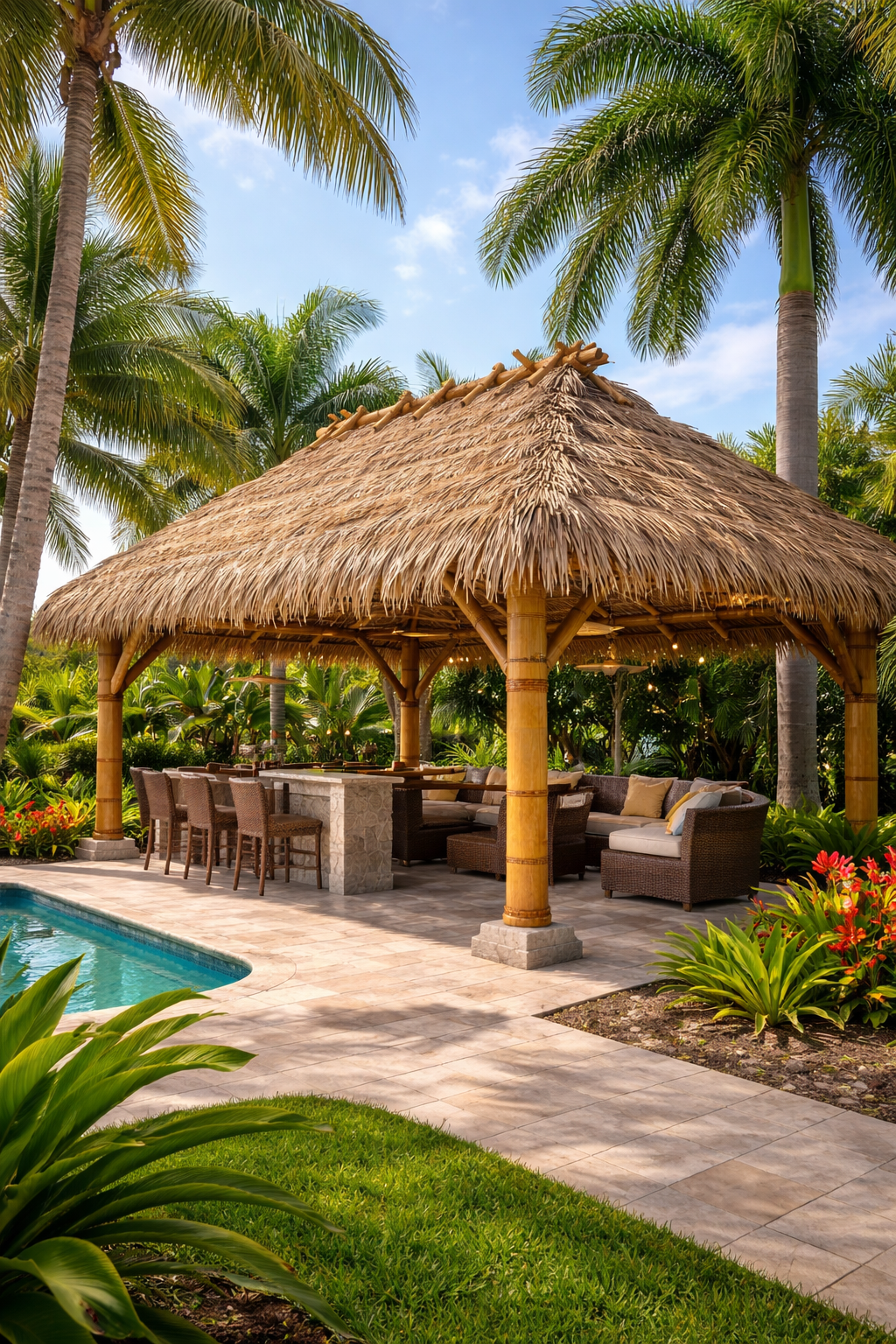
Why the Tribal Logic Cannot Be Used Outside Tribal Projects
The tribal exemption is jurisdictional and applies only to construction performed on tribal land under tribal authority. It cannot be used for residential, resort, HOA, or commercial tiki huts in Florida municipalities. Outside tribal jurisdiction, these structures must comply fully with the Florida Building Code ( Building, Section 1609 & Residential, Section R301.2.1) , ASCE 7 wind load provisions, and local permitting requirements.
From an engineering standpoint, the appropriate approach is to separate the structure into two systems: a primary structural frame designed to full code loads, and a decorative thatch roof treated as replaceable cladding. This preserves the traditional appearance while maintaining safety, permitting compliance, and insurability.
Engineering Design Strategies for Code-Compliant Tiki Huts
The structural frame should be designed like any pergola or pavilion, with full ASCE 7 wind analysis, continuous load paths, hurricane-rated connectors, and properly anchored foundations. Palm fronds should not be considered structural roofing; instead, they should be treated as sacrificial elements that may detach under extreme uplift without damaging the frame.
Modern engineered solutions often include hybrid roofs such as metal decking under thatch, synthetic wind-rated materials, or removable thatch panels for storm preparation. Keeping structures open on multiple sides and providing clear engineering documentation—calculations, connection details, and material specifications—helps ensure permit approval and reliable performance in hurricane-prone regions.

Conclusion
The tribal tiki hut exemption is a narrow legal provision based on tribal sovereignty and the preservation of traditional construction methods. It does not apply to residential, commercial, or resort tiki hut projects within Florida municipalities, where full compliance with the Florida Building Code and ASCE 7 wind-load requirements is required.
For all non-tribal projects, tiki huts must be engineered like any other accessory structure. Designing a robust structural frame, treating palm-frond roofing as replaceable cladding, and providing clear, permit-ready calculations and drawings allow engineers to create structures that are safe, durable, and approvable. This approach manages hurricane-level wind risks while maintaining constructability and serviceability.
When properly engineered, tiki huts can preserve Florida’s tropical architectural character without compromising structural performance. With sound analysis, careful detailing, and code-compliant design, these structures can perform reliably in high-wind environments and remain both functional and aesthetically authentic for years to come.
For guidance with your next project, explore our Plans, Calculators, Knowledge Base,
or contact us directly for site-specific support
Last Update: February 25, 2026
Related Knowledge Base Posts -
- Should a professional utilize the ASD (Allowable Stress Design) method or the LRFD (Load Resistance Factored Design) method when calculating the required wind pressure for use with tested-approved systems?
- Did the wind loading requirements change for rooftop structures for ASCE 7-22 – ASCE 7-16 & The Florida Building Code?
- What wind speed should I use for my project?
- ASCE 7 WIND EXPOSURE CATEGORIES AND HOW EXPOSURE ‘D’ WORKS
- About ASTM E1996 Missile Levels & Wind Zone 4
- What wind information is required for construction documents?