
Window and Door Shimming: Code Requirements and Engineering Reality
Improper shimming is a structural installation defect, not a cosmetic issue. It becomes most critical when there is a large gap between the window or door frame and the structural buck. If that gap is not correctly bridged, the installation cannot perform as designed—regardless of sealants or foam.
This issue is widely misunderstood, particularly regarding acceptable shim materials.
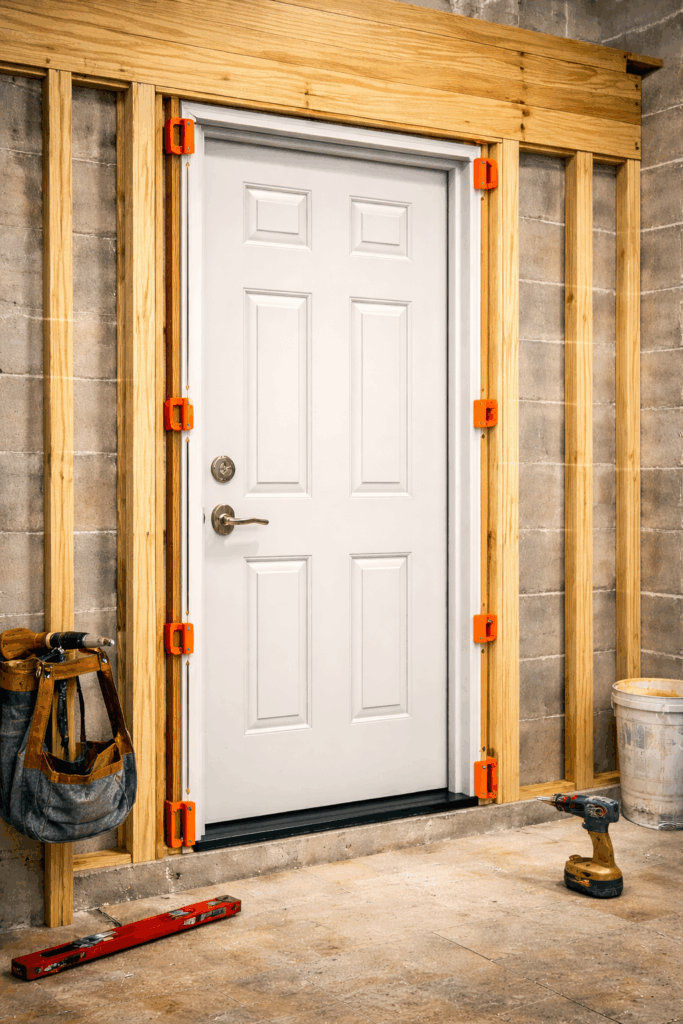
Function of Shims
Shims are load-transfer elements, not fillers. Their function is to transfer vertical and lateral loads from the window or door frame into the structural buck while maintaining the unit in proper plumb, level, and square alignment. Proper shimming also provides continuous, solid backing at fastening locations so that anchors and screws can perform as designed.
When fasteners are installed across unsupported gaps, the load path is broken. This condition leads to fastener deflection, frame distortion, operational failure, and long-term performance issues. Any fastener spanning open space constitutes a failure of structural support, regardless of the presence of foam or sealant.
Code Requirements
The IRC and IBC require that windows and doors be:
- Installed in accordance with manufacturer instructions
- Adequately supported at bearing and attachment points
- Capable of resisting applicable design loads
- Maintained in proper alignment
Neither code prescribes shim material.
Code compliance is based on performance, not material type.

A service provided by Engineering Express®
Get FORTIFIED Certified
Learn more about how to attract more insurance companies & earn discounts on insurances for following the FORTIFIED Home Process.
Acceptable Shim Materials
Wood Shims
Wood shims are commonly used in residential construction and are acceptable when they:
- Provide solid, continuous bearing
- Are protected from moisture exposure
- Maintain structural integrity over time
- Wood is vulnerable to moisture absorption, shrinkage, splitting, and decay, which can compromise load transfer and frame alignment in the long term.
Plastic Shims
Plastic or composite shims are fully code-compliant and widely used in exterior window and door installations.
They provide:
- High compressive strength
- Permanent dimensional stability
- Resistance to moisture and deterioration
- Consistent thickness for uniform bearing
- From an engineering standpoint, plastic shims often deliver equal or superior performance compared to wood, particularly where larger gaps or moisture exposure are present.
Metal Shims
Metal shims are also code-compliant when compatible with the installed system and permitted by the manufacturer.
They are typically used for:
- High-load conditions
- Tight dimensional tolerances
- Commercial or structural application
- Consistent thickness for uniform bearing
- While mechanically excellent, metal shims are rarely required in wood-framed residential openings and should be used judiciously to avoid corrosion, thermal bridging, or material incompatibility.
Structural Shimming Requirements for Large Gaps
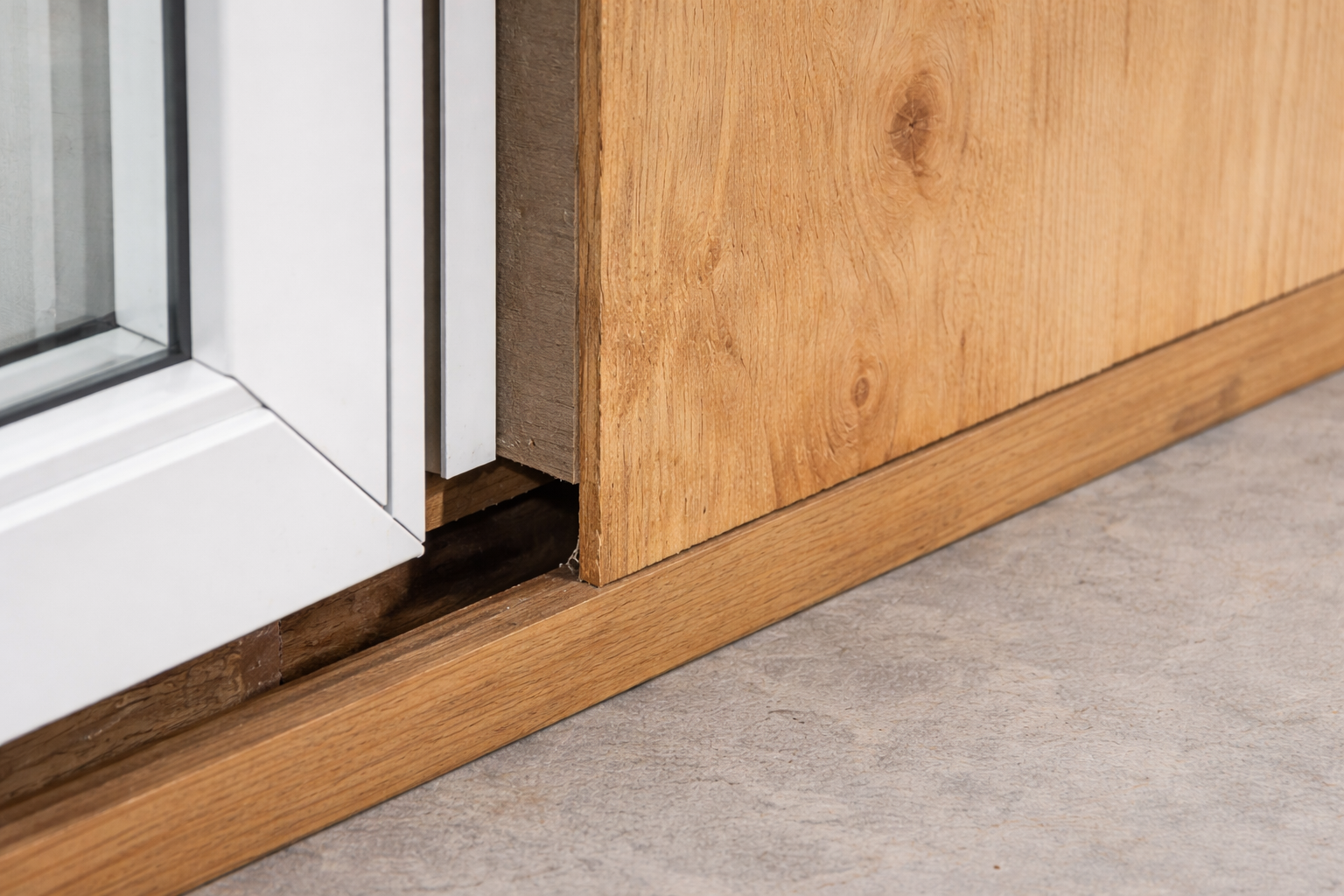
When the gap between the frame and the structural buck is significant, shimming must be continuous and load-bearing to maintain a proper load path. Large gaps cannot be addressed with spray foam, sealants, or fasteners spanning open space. Shims must fully bridge the gap and be installed at all manufacturer-required support and attachment points. Fasteners are not designed to span unsupported gaps; when they do, the load path is broken, leading to fastener deflection, loss of clamping force, and potential frame distortion. Foam and sealants do not provide structural support and cannot replace proper shimming.
Shims must fully bridge the gap and be installed at all manufacturer-required support and attachment points.
For guidance with your next project, explore our Plans, Calculators, Knowledge Base,
or contact us directly for site-specific support
Last Update: March 12, 2026
Related Knowledge Base Posts -
- Should a professional utilize the ASD (Allowable Stress Design) method or the LRFD (Load Resistance Factored Design) method when calculating the required wind pressure for use with tested-approved systems?
- What wind speed should I use for my project?
- ASCE 7 WIND EXPOSURE CATEGORIES AND HOW EXPOSURE ‘D’ WORKS
- What is a window or door buck
- How do I calculate the effective opening area on window or door products? – What opening area should be used for wind pressure determination on a multi-panel product?
- Can an engineer design alternate anchorage for a Florida product approval or other product evaluation?