
Gable End Bracing and the FORTIFIED Program
Gable end walls are a well-documented weak point in high-wind events. When a gable end fails, wind and rain can enter the attic and interior, often leading to extensive structural and water damage. The FORTIFIED® Home program specifically addresses this risk by requiring improved gable end bracing and verified load paths in wind-resistant construction.
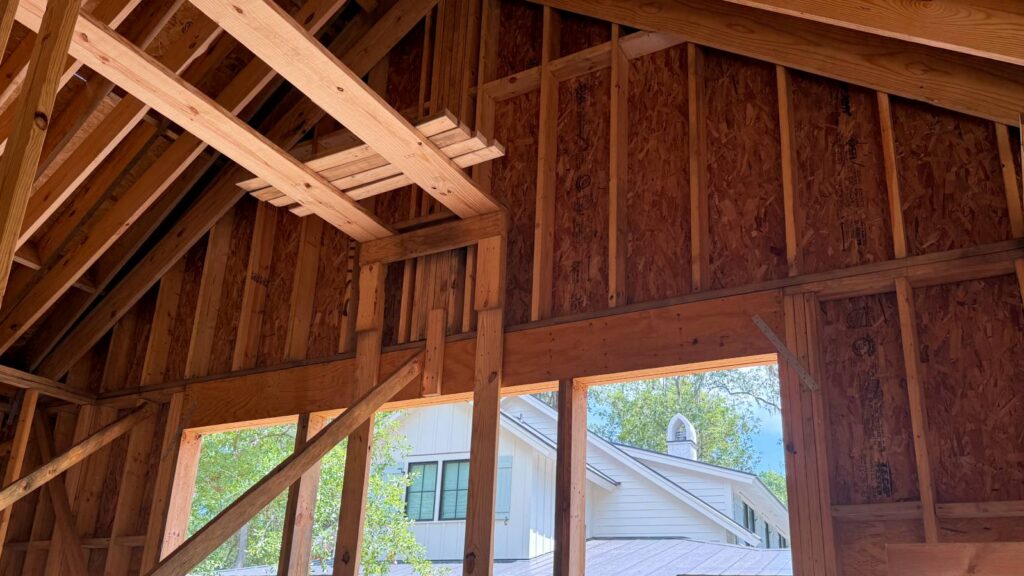
What Is Gable End Bracing?
Gable end bracing strengthens the triangular wall at the end of a gable roof by tying it into the roof and ceiling framing. The goal is to prevent the gable end from collapsing or deflecting under wind pressure.
Typical components include:
- Lateral bracing extending from the gable end into the attic framing
- Metal straps or connectors that create a continuous load path
- Blocking and enhanced fastening at critical connections
These measures allow wind loads to be transferred safely into the rest of the structure.

Why Gable End Bracing Matters in FORTIFIED
Post-storm damage investigations consistently show gable end failures as a common starting point for major losses. Because of this, FORTIFIED Roof, Silver, and Gold designations all recognize gable end bracing as a key wind-mitigation feature, particularly for homes with traditional gable roofs.
FORTIFIED Roof guidance specifically highlights gable end bracing as part of improving roof system performance during high winds.
How FORTIFIED Addresses Gable End Bracing
In all cases, the intent is the same: to create a reliable load path that helps the home better resist wind forces
- Lateral bracing extending from the gable end into the attic framing
- Metal straps or connectors that create a continuous load path
- Blocking and enhanced fastening at critical connections
FORTIFIED goes beyond basic building practices by ensuring that gable end bracing is not only present, but effective. Depending on the project and designation level, this may involve:
Verification and Documentation
FORTIFIED places a strong emphasis on accountability. Gable end bracing isn’t just added — it’s confirmed to be correctly completed before a home earns a FORTIFIED designation.
This approach helps ensure the bracing is properly integrated into the structure and will perform as expected during high-wind events.
Gable end walls are particularly vulnerable to wind damage due to lateral pressures and uplift forces. To address this risk, Section 5.5 of the 2025 FORTIFIED Home™ Standard requires enhanced gable end construction to improve structural performance during high-wind events

The standard mandates prescriptive gable end outlooker framing and anchorage per Detail F-GE-1, ensuring gable ends are properly tied into the roof structure and capable of transferring wind loads into the main structural system. Where gable end vents are present, vent protection requirements further reduce the risk of attic pressurization and wind-driven rain intrusion
Compliance with these requirements must be documented as part of the FORTIFIED designation process, helping ensure consistent, verifiable wind-resistant construction.
Example of a Gable End Home
This home has numerous gable ends, two of which can be seen at the front elevation shown here.
The design and FORTIFIED Gold Status of this home was provided with consultation by Engineering Express.

Gable end bracing addresses one of the most common structural vulnerabilities in high-wind events. By strengthening gable end walls and verifying proper installation, the FORTIFIED program helps protect the roof system, limit water intrusion, and reduce the risk of major damage during severe storms.
OTHER USEFUL ARTICLES
For guidance with your next project, explore our Plans, Calculators, Knowledge Base,
or contact us directly for site-specific support
Last Update: February 26, 2026
Related Knowledge Base Posts -
- Should a professional utilize the ASD (Allowable Stress Design) method or the LRFD (Load Resistance Factored Design) method when calculating the required wind pressure for use with tested-approved systems?
- Did the wind loading requirements change for rooftop structures for ASCE 7-22 – ASCE 7-16 & The Florida Building Code?
- What wind speed should I use for my project?
- ASCE 7 WIND EXPOSURE CATEGORIES AND HOW EXPOSURE ‘D’ WORKS
- The One-Third (1/3) Stress Increase: Where Is It Now?
- The Updated Saffir-Simpson Scale